
Leadership
Check the whole access route before booking an event venue
An accessible entrance is only one part of a usable venue. Follow the attendee's route, inspect the room as it will be arranged, and confirm what happens when an access feature is unavailable.
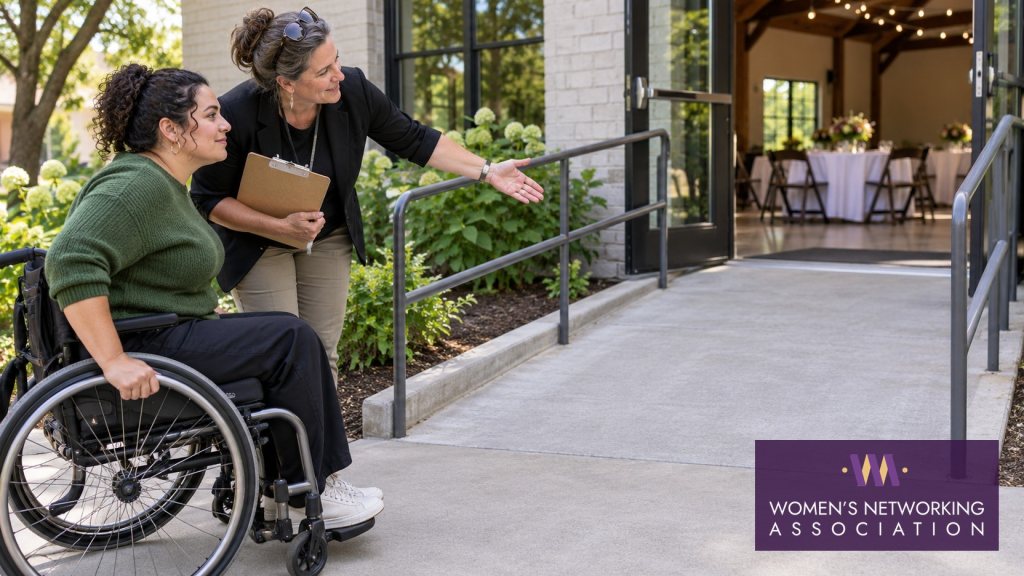

Your association needs a room for an evening gathering. A venue says it is accessible and sends photographs of a ramp and a spacious meeting room. That is a useful start, but it does not show whether the entrance stays open after six, where the toilets are, or how the room works once tables are installed.
Before booking, follow the route an attendee will actually use. Treat accessibility as a chain of practical arrangements, from arrival to departure, rather than a single feature. A site visit can identify questions that a brochure or checklist leaves unanswered.
Find out what participation requires
Begin with the event: expected numbers, timing, seating, refreshments, and whether attendees will use a stage or move between rooms. Invite people to describe access requirements privately, with a named contact who can discuss arrangements. Ask what would help them participate; you do not need a diagnosis to consider a request.
Include disabled participants or a suitably experienced access adviser in planning where possible. Agree the scope and recognize their time. One person’s experience cannot represent every attendee, so keep the opportunity to raise a requirement open as planning progresses.
Sisters of Frida’s 2026 research on London venues includes transport, the physical space, support people, and participants’ wider circumstances. Its report also explains that not every listed venue was personally visited. That is a useful reminder to distinguish a researched lead from confirmation that a particular room will work for your event.
Walk the route from arrival to the room
Visit at a time resembling the event’s operating conditions if possible. Start at the likely public transport approach, drop-off point, or parking area. Check the route surface, crossings, signs, lighting, and distances. Ask which doors will be open, whether a key or intercom is required, and who will be available to help.
Shape Arts’ venue guidance, published in 2025 and updated in September 2026, highlights small steps and uneven ground, lift reliability and independent operation, heavy doors, and the location of an alternative entrance. These are specific questions to investigate, not a declaration that any building described as step-free meets every access requirement.
Follow the route to the booked room, toilets, refreshments, and any quieter space. Check that these facilities will be available for the full event, including setup and departure. Ask the venue manager how emergency arrangements accommodate attendees with different access needs and what happens if a lift or powered door fails.
Inspect the room as it will be used
An empty room can appear easy to navigate. Request the proposed layout with tables, chairs, catering, registration, and equipment in place, or marked out. Check circulation routes, seating choices, sightlines, and access to refreshments. Include the position from which anyone will speak, rather than considering only audience seating.
Confirm the actual toilet facilities and route instead of relying on a symbol in the venue list. Ask about equipment or space someone specifically needs and any access restrictions. Do not assume that an accessible toilet and a Changing Places facility offer the same provisions.
Listen for background noise and ask what other activities will take place nearby. Check lighting controls, hearing-support equipment, and somewhere to step away from the main room. Test equipment with the venue rather than assuming that its presence means it is ready for use.
In a May 2025 account of its own improvements, Bristol science centre We The Curious described a lowered reception desk, improved wayfinding, and a dedicated quiet room. These are examples of different parts of an arrival and participation experience. They do not make that venue a recommendation for your gathering or replace checking your chosen space.
Resolve the gaps before committing
Imagine two shortlisted rooms. The first is beside the station, but its step-free entrance is normally locked in the evening. The second has a longer approach but keeps the same entrance open for everyone and provides the required facilities on one floor. The first needs a reliable, confirmed access arrangement; the second still needs a workable journey. A single accessibility label cannot choose between them.
Record each unresolved issue, the agreed remedy, its owner, and when you will verify it. Obtain written confirmation of essential arrangements. If a requirement cannot be met reliably, reconsider the venue while alternatives remain available.
Before the event, share accurate arrival instructions and the features and limitations you have checked. Reconfirm arrangements with the duty staff, then inspect the route again during setup. Give attendees a contact for changes or problems. Their feedback can improve the next booking as well as reveal something that needs attention today.